
Family as a Semantic Substitute for Race
"Systemic racism is so embedded in systems that it often is assumed to reflect the natural, inevitable order of things"
(Braveman et al., 2022)
Following World War II, the idea of "family" began to take on a symbolic role as a substitute for race (McWhorter, 2009). McWhorter discusses how the concept of family became a metaphor for race, with eugenic beliefs fueling the views that the Nordic population was superior and needed to be preserved. Physical genetic traits were not the only measures of superiority, but there was a clear agenda that it was necessary to breed the best individuals from the best stock.
The belief that any race other than white threatened racial and familial purity was used to promote the ideal of the perfect nuclear family. Race could be viewed as equivalent to disability (Lenon & Peers, 2017; McWhorter, 2009). Racism showed up through anti-Black rhetoric and the devaluation of other groups like Jewish, Italian, Irish, and Indigenous peoples (McWhorter, 2009, p. 248). Racial purity was also tied to the idea that homosexuality was a deviant behaviour and that non-traditional families might produce children who were criminals, perverts, or mentally ill, which was a threat to the social order, reinforcing the Nordic race as superior. Cultural narratives supporting the typical family's ideologies presented not only economic consequences for non-traditional families, but also social problems. In the late twentieth century, the pro-family movement was a disguise for racist rhetoric and for racism against the abnormal (McWhorter, 2009).
Paul Popenoe
1888-1979
(scroll over for info)

What was his influence on
'The Family'
Paul Popenoe was a famous eugenicist who believed in white supremacy (McWhorter, 2009). One of his leading contributions was the encouragement of forced sterilization. He believed that would protect the white race from what he believed were abnormalities. He was instrumental in advocating for the pro-family movement since he strongly believed in the importance of maintaining the values of the "normal" family.
He states that “the normal family may be defined as one in which two adults live together happily, and give birth to an appropriate number of healthy and intelligent children, whom they bring up to lives of usefulness” (McWhorter, 2009, pp. 251–252)
The New Deal
“Race-based federal lending rules from New Deal programs in the 1930s kept Black families locked out of suburban neighborhoods [sic] a policy that continues to slow economic mobility” (Rissman, 2022).
This 10-minute film highlights the effects of these practices and how these racially-based government loans promoted the segregation of communities across the U.S. (Rissman, 2022).
The idea of the "normal family" had a significant and unfair impact on Black families because they were rarely depicted as the ideal family unit (McWhorter, 2009). Black families often faced significant obstacles, such as difficulty getting loans or life insurance, which made it harder for them to buy homes, start businesses, or feel financially secure. They were also forced to live in neighbourhoods that were far from ideal, with conditions much worse than those of white communities. Racism and capitalist attitudes only added to the challenge as it made it harder for Black people to succeed. They experienced increased social inequalities. Some examples include: often being subjected to living in impoverished areas, struggling with food insecurity, having limited access to healthcare, and facing higher unemployment rates. These factors contributed to higher rates of birth defects among their children (McWhorter, 2009; Steckley, 2020).
The New Deal, enacted by
President Franklin Roosevelt, in the early 1930s,
largely left black families and other people of colour
out of its benefits. Several of the sectors that
employed many Black Americans, such as agriculture,
were excluded from receiving old age security and
social assistance. It also disproportionately affected
Black women, who were the predominant staff in
caregiving, teaching, and nursing, as they also did
not qualify for these benefits. The way the New Deal
was structured was racist in its effects and furthered
the segregation of Black Americans through a policy
known as ‘redlining’ (Davidson, 2021;
Gross, 2017; McWhorter, 2009). This initiative was
“primarily designed to provide housing to white,
middle-class, lower-middle-class families”(Gross, 2017, para. 2).
These ideologies continue to be perpetuated today as “[t]he racial wealth gap also remains persistent, with white families having nearly
10 times the wealth of Black families" (Peralta, 2020, para. 9).
The type of economic gain for those who had the
“perfect nuclear family”


Read more about how the New Deal continues to foster modern day racism
Democrats seek to undo institutional racism embedded in pivotal New Deal law - The Washington Post
The New Deal in New York City, 1933—1943 - Roosevelt House Public Policy Institute at Hunter College
Picture of a social security ad
depicting a white mother and child
(Hunter College, 2025)
Check out these articles for more information on the impacts of
the New Deal then and now
The Myth of the Welfare Queen

In 1976, Ronald Reagan made a campaign speech that vilified Black single women. He used Linda Taylor as the 'poster child' for welfare. What he failed to mention was that she was a notorious criminal, with accusations made against her for kidnapping and homicide (Ronald Reagan Campaign Speech, January 1976, 2013).
One of the most criticized and publicized figures was Linda Taylor, who became the face of the welfare queen stereotype, a label that is often unfairly placed on Black single mothers. She was used as a common representation of Black women in America, but this depiction was an inaccurate and damaging portrayal of Black women. Her story was used to exaggerate and reinforce a false narrative about Black women, painting them as taking advantage of the system. This rhetoric was blown out of proportion, making it seem like her behaviour was typical of all Black women, even though it was far from the truth (Levin, 2013).
Several Black households did not have a male breadwinner, which meant that many Black women had to work and raise their families on their own. These women, who did not have access to the same social and economic opportunities, were unfairly judged (McWhorter, 2009).
These negative stereotypes
followed them, as seen in the
quote, "[t]he Negresses were
sluts in comparison to normal
ladies and gentlemen of the
Nordic race"
(McWhorter, 2009, p. 248).
The liberals introduced welfare programs and food stamps to support women in need, but many saw it as a way for Black people to continue having what were viewed as "inferior, subnormal offspring" (McWhorter, 2009, p. 263). This led to the creation of the stereotype of the lazy mother and the myth of the Welfare Queen. She was an “unmarried Black woman who deliberately got pregnant over and over in order to collect an extra forty or fifty dollars per month per child and who raised her children to be similar parasites on the system” (McWhorter, 2009, p. 263). The welfare queen posed a threat to the traditional beliefs of the family. The Black family was portrayed as less stable than the traditional white nuclear family. The concept of the welfare queen was fabricated to impose moral panic and disguise the real issue of poverty and social injustice (Levin, 2013; McWhorter, 2009).
These labels reinforced the narrative that Black families were dysfunctional and abnormal. They furthered the beliefs that Black families failed to adhere to the ideal nuclear family, and they discounted the systemic inequalities that cultivated these norms. The reality is that many marginalized communities were required and continue to be reliant on assistance because of racist and capitalist policies (Levin, 2013; McWhorter, 2009; Stern, 2020).
Check out these articles, video, and podcast for more information on the myth of the "Welfare Queen"


Linda Taylor going to trial in 1977 (Levin, 2013)
7 minute video of the true story behind the welfare queen stereotype
(PBS News Hour | The True Story behind the ‘Welfare Queen’ Stereotype | Season 2019, 2019)
7:35 minute podcast on the truth behind the lies of the original Welfare Queen
(Demby, 2022)
Modern Examples of Family Ideologies
Notable Television Throughout the Decades
Test Your Knowledge
How many shows can you name and from which decade?
Scroll over picture to see answer -->
Read below to know more about their cultural relevance
Portrayals of "Normal" Traditional Families

Leave it to Beaver
1957-1963

Family Ties
1982-1989

7th Heaven
1996-2007

All in the Family
1971-1979

The Brady Bunch
1969-1974
Portrayals of 'Abnormal' Families

The Cosby Show
1984-1992
Note: we recognize that Bill Cosby faced numerous allegations of sexual assault, which gained significant public attention. It was still a groundbreaking show for its time.
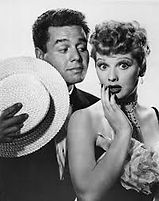
I Love Lucy
1951-1957
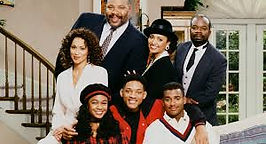
The Fresh Prince of Bel-Air
1990-1996

Modern Family
2009-2020

Black-ish
2014-2022
Cultural Relevance of these Shows and the "Family"
Normal Families Cultural Relevance
Television played a key role in promoting the traditional family by consistently showing an idealized version of family life. These shows often depicted families with a working father, a stay-at-home mother, and well-behaved children in suburban homes. This became the standard that shaped society’s view of what a normal family should look like, reinforcing traditional gender roles (Cantor, 1991; Morgan & Signorelli, 2001).
How these shows reinforced the traditional family narrative:
-
Leave It to Beaver portrayed the ideal 1950s nuclear family, with traditional gender roles and family structures.
-
The Brady Bunch was about a blended family and showed how family portrayals were evolving while maintaining traditional values. It maintained the norm of the father as the head and the mother managing the home.
-
All in the Family challenged the traditional family images by focusing on issues like racial conflict and gender roles. It presented a more realistic, sometimes dysfunctional family dynamic.
-
Family Ties also displayed a white nuclear family in the 1980s. They would have discussions about life, politics, and societal changes.
-
7th Heaven featured a religious white nuclear family. This show would often offer moral lessons on relationships, faith, and teen issues.
(Connelly & Mosher, 1957; Goldberg & Garver, 1982; Hampton et al., 1996; Lear & Yorkin, 1971; Schwartz, 1969)
Reflection Questions
- How have these 'abnormal' shows become increasingly 'normal' throughout the years?
- Can you think of other television shows that showcase ‘normal’ and ‘abnormal’ family dynamics?
- Have your views on what is considered 'normal' changed after reading this lesson?
- How have you encountered these 'norms' in your own life?
Summary
-
Although it appeared to be subtle, racism was heavily rooted in how the family was defined in post-WWII.
-
Paul Popenoe was influential in emphasizing the characteristics of the traditional family.
-
Anti-Black rhetoric was largely implemented in government policies and benefits.
-
The New Deal enacted in the 1930s benefited the white race and disproportionately affected Black and brown families. The structural design of the New Deal excluded Black families from accessing financial and social resources.
-
The myth of the “welfare queen’ reinforced false narratives about Black women who were often single mothers.
-
Modern examples of family ideologies were depicted on television and promoted the notions of the idealized families. While media shifted over the decades, shows that did not conform to the normal family were considered abnormal as they did not observe traditional family narratives.
-
While the notion of family has shifted throughout the decades, racist ideologies continue to be present as modern-day racism.
Designed and written by Chantale Roy
References
Anderson, A., Dobbins, B., Sugland, H., Groff, J., Barris, K., Smith, K., Wilmore, L., Young, P., Fishburne, L., Principato, P., Russo, T., Lerner, G., & Courtney, L. (Producers). (2014, 2022). Black-ish [TV Series]. ABC Signature Wilmore Films, Khalabo Ink Society, Cinema Gypsy Productions, Principato-Young Entertainment, Artists First.
Arnaz, D. (Producer). (1951, 1957). I Love Lucy [TV Series]. Desilu Productions.
Braveman, P. A., Arkin, E., Proctor, D., Kauh, T., & Holm, N. (2022). Systemic And Structural Racism: Definitions, Examples, Health Damages, And Approaches To Dismantling. Health Affairs, 41(2), 171–178.
Cantor, M. G. (1991). The American Family on Television: From Molly Goldberg to Bill Cosby. Journal of Comparative Family Studies, 22(2), 205–216.
Carsey, M., Werner, T., Kukoff, B., & Leahy, J. (Producers). (1984, 1992). The Cosby Show [TV Series]. Carsey-Werner Productions.
Connelly, J., & Mosher, B. (Producers). (1957, 1936). Leave It to Beaver [TV Series]. Gomalco Productions, Kayro Productions.
Davidson, J. (2021, June 12). Perspective | Democrats seek to undo institutional racism embedded in pivotal New Deal law. Washington Post. https://www.washingtonpost.com/politics/new-deal-law-racism/2021/06/11/bd3a2612-ca2c-11eb-93fa-9053a95eb9f2_story.html
Demby, G. (Director). (2022, December 21). The Truth Behind The Lies Of The Original “Welfare Queen” [Broadcast]. In All Things Considered. NPR. https://www.npr.org/sections/codeswitch/2022/12/20/1144492628/unlocking-family-history-in-before-me
Goldberg, G., & Garver, L. (Producers). (1982, 1989). Family Ties [TV Series]. Ubu Productions, Paramount Television.
Gross, T. (Director). (2017, May 3). A “Forgotten History” Of How The U.S. Government Segregated America [Broadcast]. In Fresh Air. NPR. https://www.npr.org/2017/05/03/526655831/a-forgotten-history-of-how-the-u-s-government-segregated-america
Hampton, B., Spelling, A., Vincent, E. D., Olsen, C., & Olsen, J. (Producers). (1996, 2007). 7th Heaven [TV Series]. Spelling Television, CBS Paramount Network Television.
Hunter College. (2025). The New Deal in New York City, 1933—1943. Roosevelt House Public Policy Institute at Hunter College. https://www.roosevelthouse.hunter.cuny.edu/exhibits/new-deal-new-york-city/
Jones, Q., Salzman, D., Borowitz, A., Borowitz, S., Wendle, K., Pollack, J., Medina, B., Hervey, W., Miller, G., Gard, C., & Smith, W. (Producers). (1990, 1996). The Fresh Prince of Bel-Air [TV Series] [Broadcast]. The Stuffed Dog Company, Quincy Jones-David Salzman Entertainment, NBC Productions, Warner Bros. Television.
Lear, N., & Yorkin, B. (Producers). (1971, 1979). All in the Family [TV Series]. Tandem Production, Sony Pictures Television.
Lenon, S., & Peers, D. (2017). ‘Wrongful’ Inheritance: Race, Disability and Sexuality in Cramblett v. Midwest Sperm Bank. Feminist Legal Studies, 25(2), 141–163. https://doi.org/10.1007/s10691-017-9347-y
Levin, J. (2013, December 19). The Real Story of Linda Taylor, America’s Original Welfare Queen. Slate Magazine. http://www.slate.com/articles/news_and_politics/history/2013/12/linda_taylor_welfare_queen_ronald_reagan_made_her_a_notorious_american_villain.html
Levitan, S., Lloyd, C., Morton, J., Corrigan, P., O’Shannon, D., Walsh, B., Wrubel, B., Richman, J., Higginbotham, A., Lloyd, S., Ko, E., Tatham, C., Chandrasekaran, V., Pollack, J., & Burditt, J. (Producers). (2009, 2020). Modern Family [TV Series]. Lloyd-Levitan, Picador Productions, Steven Levitan Productions, 20th Century Fox Television.
McWhorter, L. (2009). Racism and Sexual Oppression in Anglo-America: A Genealogy. Indiana University Press.
Morgan, M., & Signorelli, N. (2001). Television and the Family: The Cultivation Perspective. In J. A. Bryant (Ed.), Television and the American Family. Routledge.
PBS News Hour | The true story behind the ‘welfare queen’ stereotype | Season 2019. (2019). [Video recording]. https://www.pbs.org/video/the-true-story-behind-the-welfare-queen-stereotype-1559408309/
Peralta, J. (2020, June 11). The New Deal Made America’s Racial Inequality Worse. We Can’t Make the Same Mistake With Covid-19 Economic Crisis. The
Rockefeller Foundation. https://www.rockefellerfoundation.org/perspective/the-new-deal-made-americas-racial-inequality-worse-we-cant-make-the-same-mistake-with-covid-19-economic-crisis/
Rissman, K. (Director). (2022). Whites-Only Suburbs: How the New Deal Shut Out Black Homebuyers | Retro Report—YouTube [Video recording]. https://youtu.be/RQXomCSD_WU?feature=shared
Ronald Reagan campaign speech, January 1976. (2013, December 16). [Audio recording]. https://soundcloud.com/slate-articles/ronald-reagan-campaign-speech
Schwartz, S. (Producer). (1969, 1974). The Brady Bunch [TV Series]. Redwood Productions, Paramount Television.
Stern, S. W. (2020, April 17). COVID-19 and the Revival of the “Welfare Queen” Myth. Boston Review. https://www.bostonreview.net/articles/scott-w-stern-covid-19-and-welfare-queens/